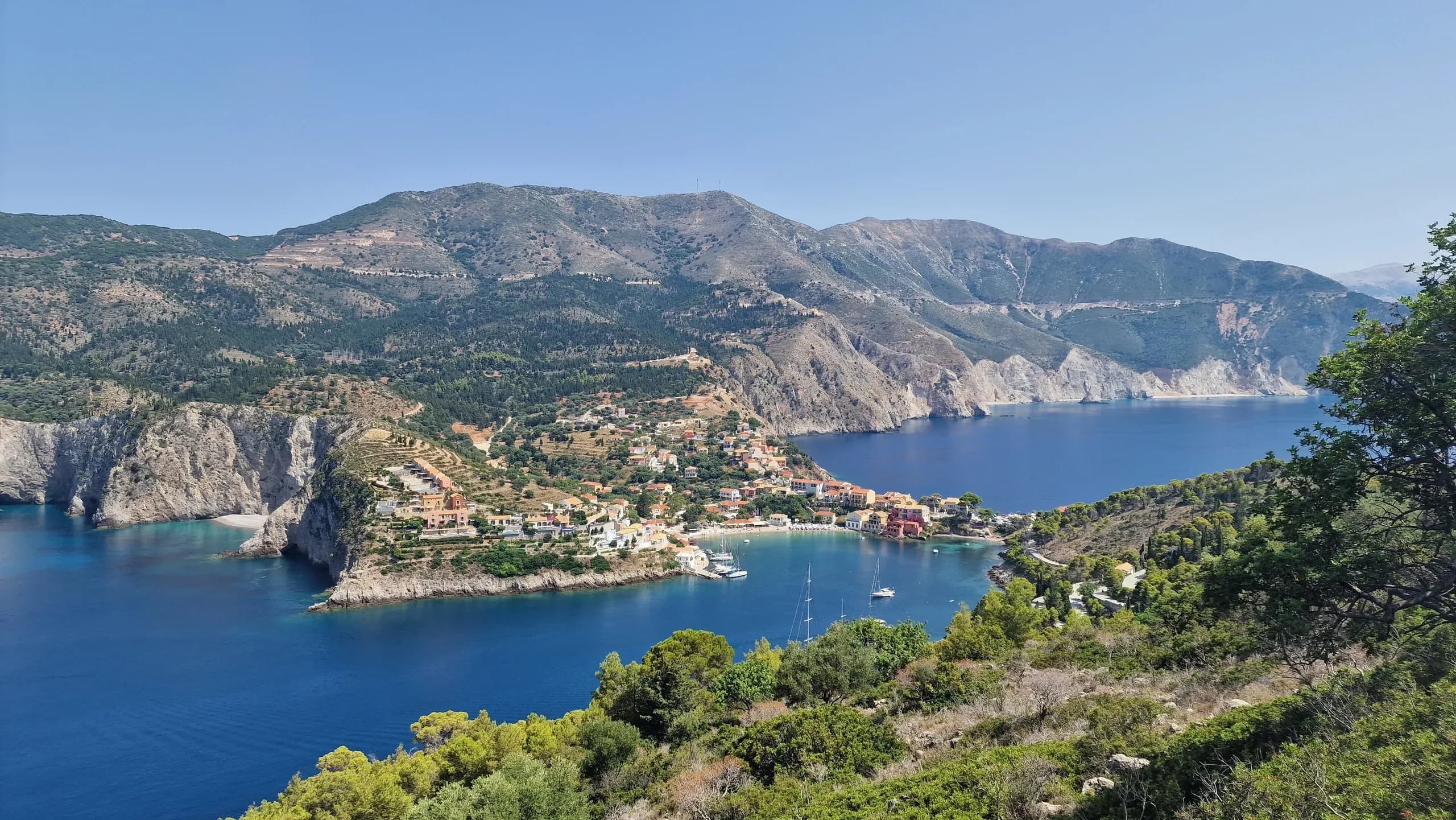
Things to do in Kefalonia beyond the beaches
Cave visits, an Argostoli morning, Assos, wine tasting and a farm meal: plan separate Kefalonia outings with maps and practical tips.
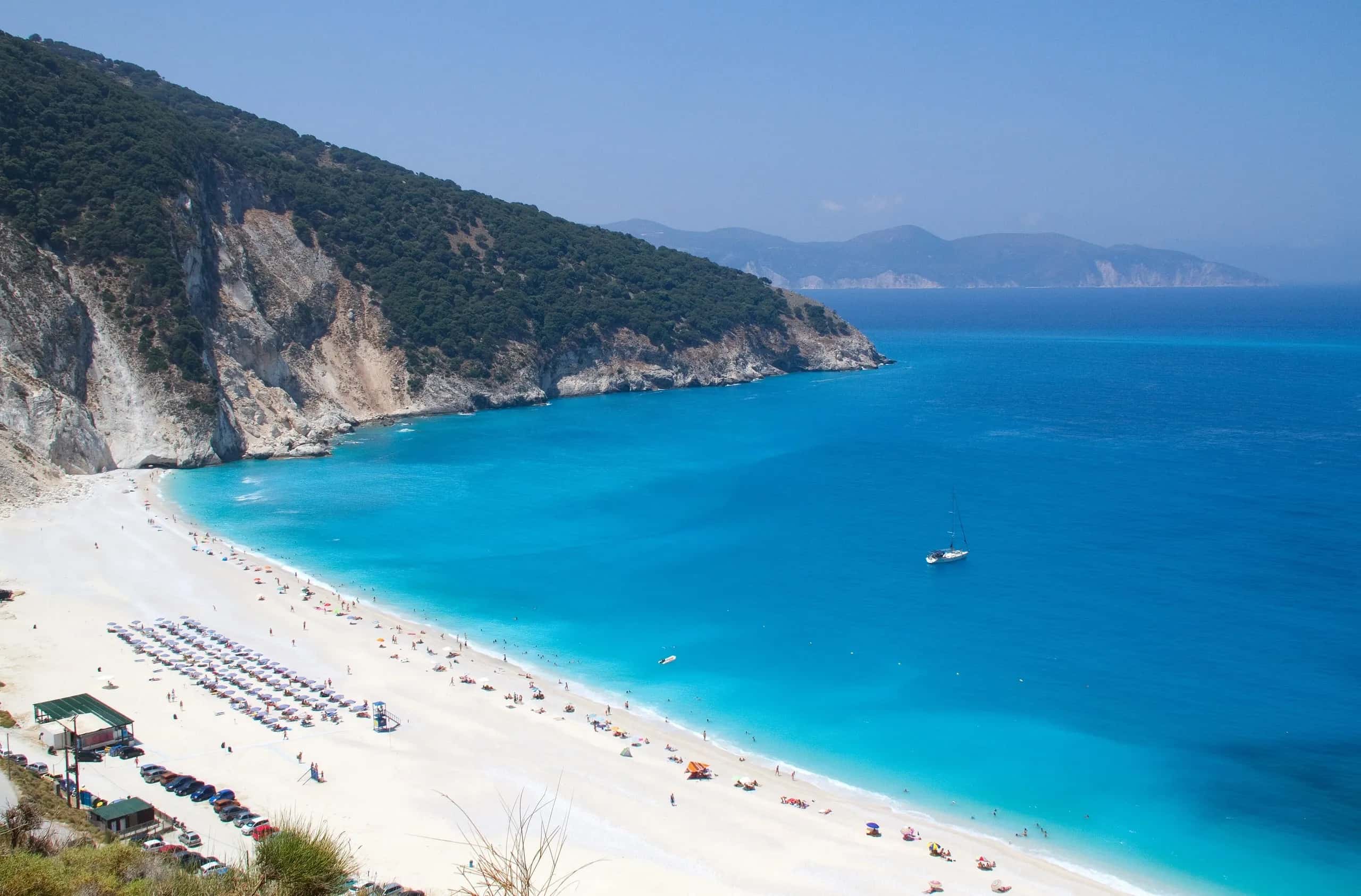
Seven Kefalonia beaches, from Myrtos to Avithos and Fiskardo, with food stops and practical advice on sand, pebbles, access and planning your day.
Some holiday mornings call for sand, a parasol and lunch within a few steps of your towel. Others are worth a winding drive for a pale bay beneath towering cliffs. Kefalonia has both, but its famous beaches are surprisingly different: several are pebbly, and some deepen quickly just offshore.
These seven beaches are selected around the practical questions that shape a day by the sea: what is underfoot, how you get there, where you can eat and what makes sense to visit nearby. If you are still choosing a base, our Kefalonia destination guide connects the island's areas with places to stay.
For sand near Argostoli, start with Makris Gialos or Avithos. For the dramatic bay in so many island photographs, choose Myrtos. Antisamos suits a beach day with lunch and seasonal facilities near Sami. In the north, Foki and Emplisi work well with Fiskardo. Petani belongs on a day exploring the Paliki peninsula, with the option of staying for sunset.
You do not need to see them all. Two nearby stops can fill a lovely day; driving between opposite ends of the island to tick off another name can cost you the time you wanted by the water.
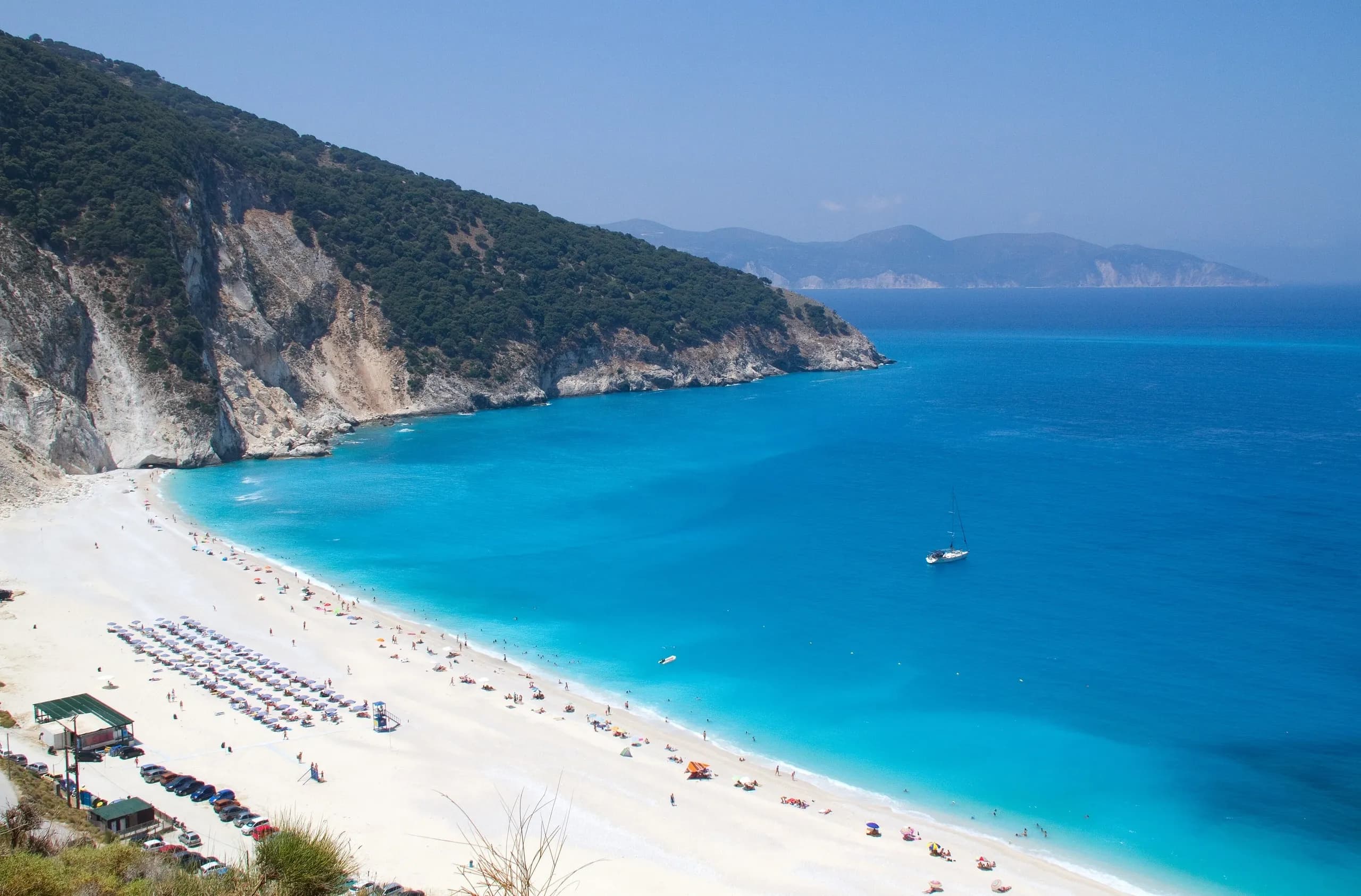
Myrtos is the pale crescent beneath high cliffs, its water changing from deep blue to turquoise. From above, the shore can look like smooth white sand. Down on the beach, you will find plenty of light-coloured pebbles too. Water shoes are useful if you find stones uncomfortable.
You can enjoy the view without driving down. Reaching the beach involves a steep, winding road from Divarata, so allow time rather than treating it as a quick photo stop. Facilities are seasonal and more limited than at a resort beach lined with places to eat.
The scenery is only part of the decision. The water deepens quickly, and waves can make entering and leaving the sea difficult. Check conditions and beach instructions on the day. For a family with small children, a convenient sandy beach may fit the plan better, regardless of how tempting Myrtos looks from the road.
Myrtos on Google Maps (opens in a new tab)
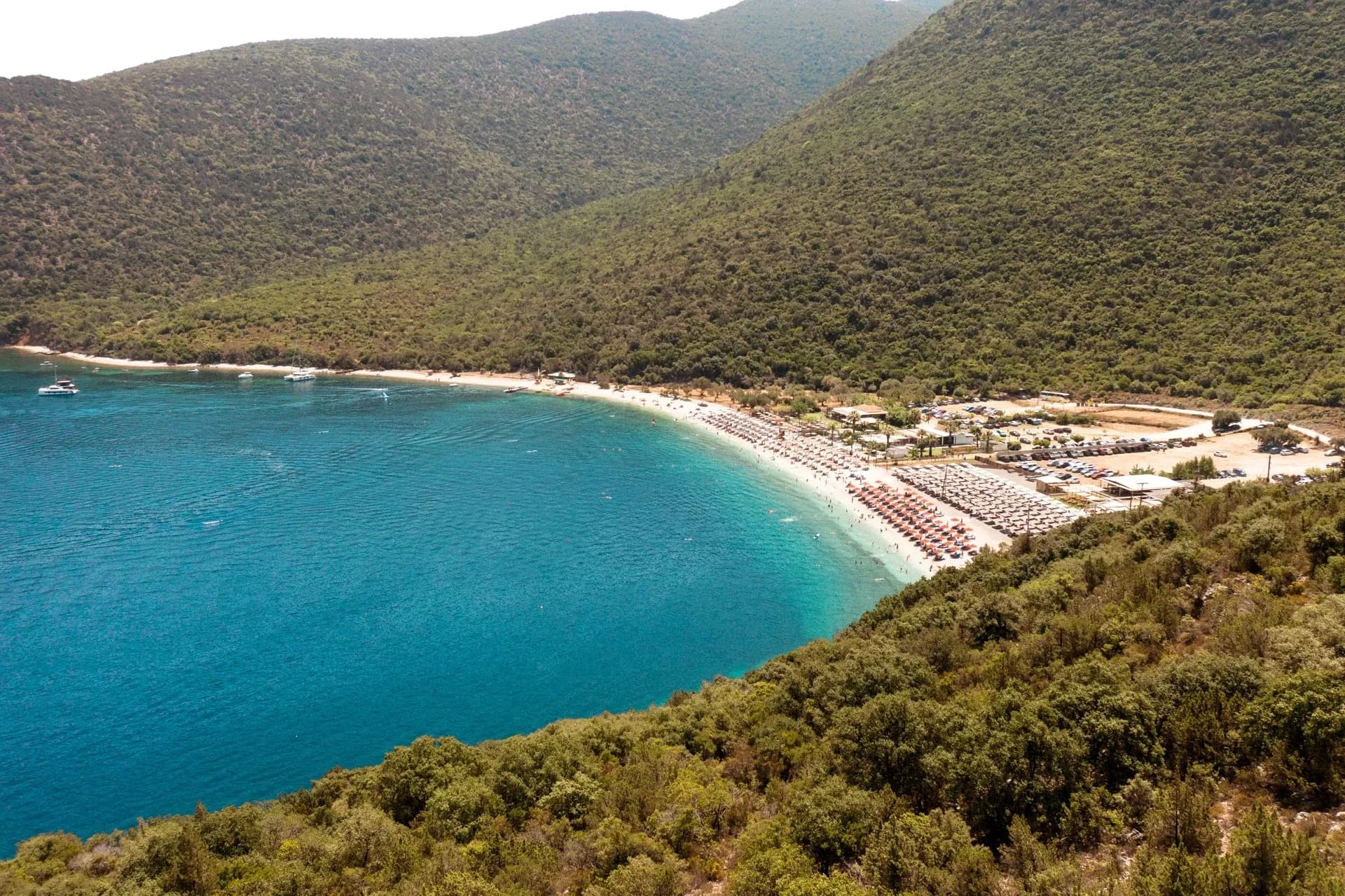
Antisamos owes much of its character to the wooded slopes surrounding its bright shore. It lies near Sami on the island's eastern side, reached along a winding coastal road. The beach is mainly pebbly rather than the soft sand its photographs sometimes suggest.
This is a place where you can plan around food, sunbeds and activities rather than carrying everything for an undeveloped cove. Several beach businesses operate in season, and organised sections can have a lively, musical atmosphere. A forested backdrop does not automatically mean a secluded beach.
Antisamos on Google Maps (opens in a new tab)
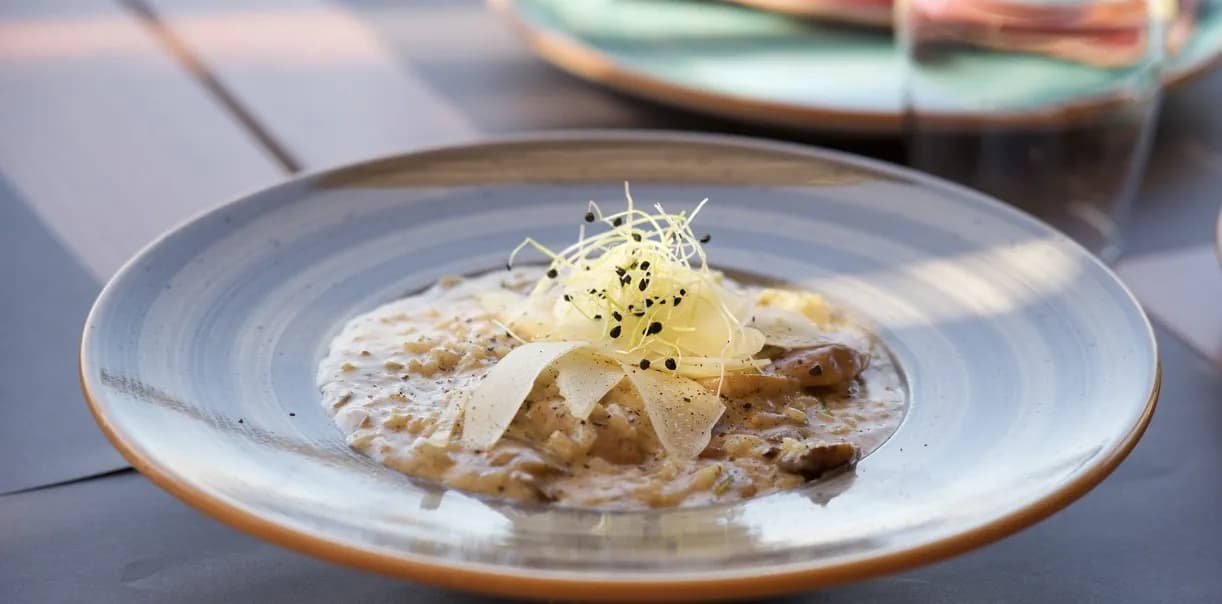
Acron Antisamos combines a beach bar with a restaurant. The restaurant describes its cooking as Greek and Mediterranean, using ingredients from local producers. It is a practical option for a proper sit-down meal without driving back to Sami.
A restaurant reservation and use of the beach bar's sunbeds are separate arrangements. Check the current menu, prices and beach-service terms, particularly in high summer. Beach businesses are seasonal, so confirm that they are operating before travelling outside the main season.
Acron on Google Maps (opens in a new tab)
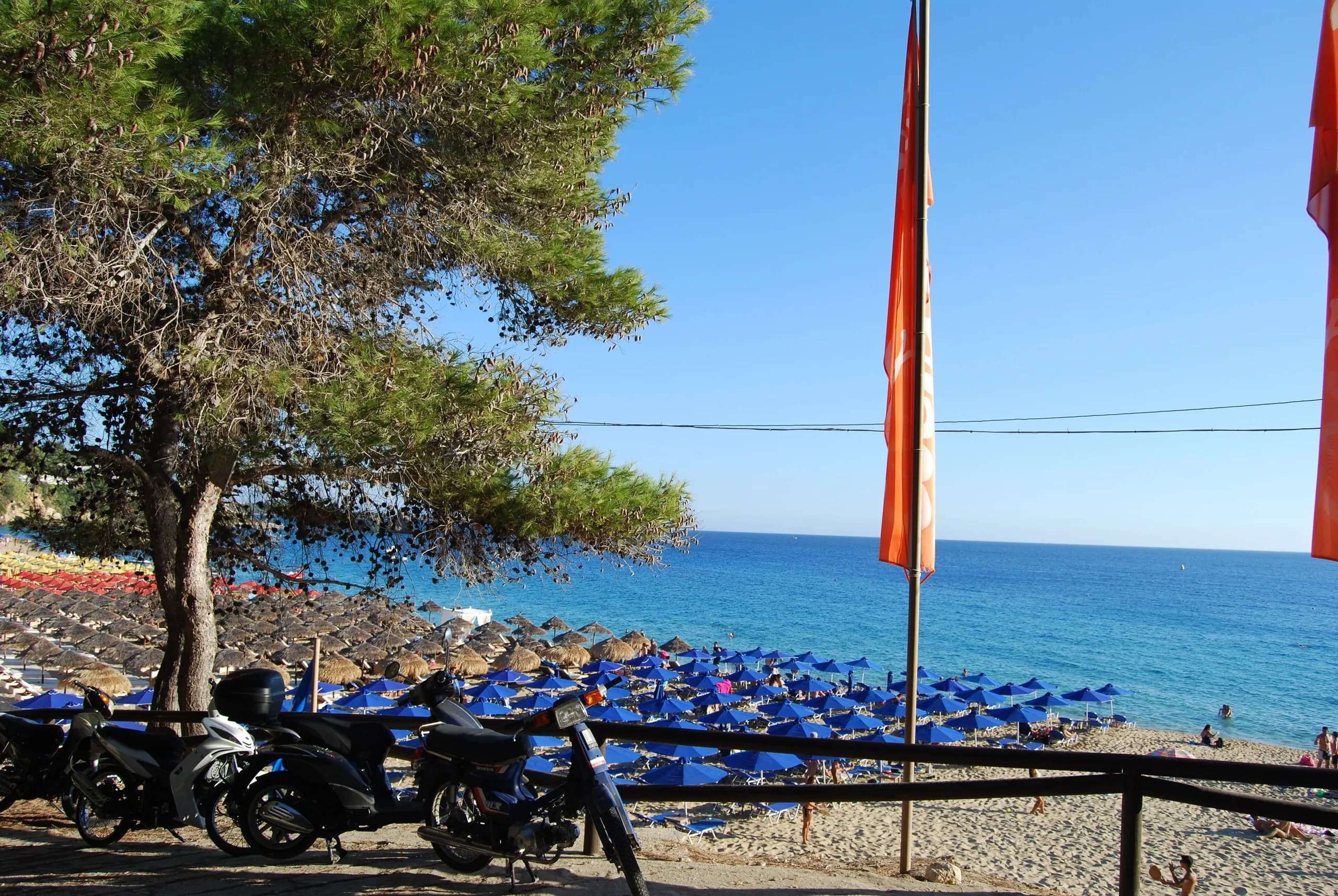
Makris Gialos is a sandy beach in Lassi, close to Argostoli. For swimming, a parasol and food nearby, it is a straightforward choice compared with a remote bay. Organised sections have seasonal beach businesses and water sports, along with plenty of visitors in July and August.
Makris Gialos on Google Maps (opens in a new tab)
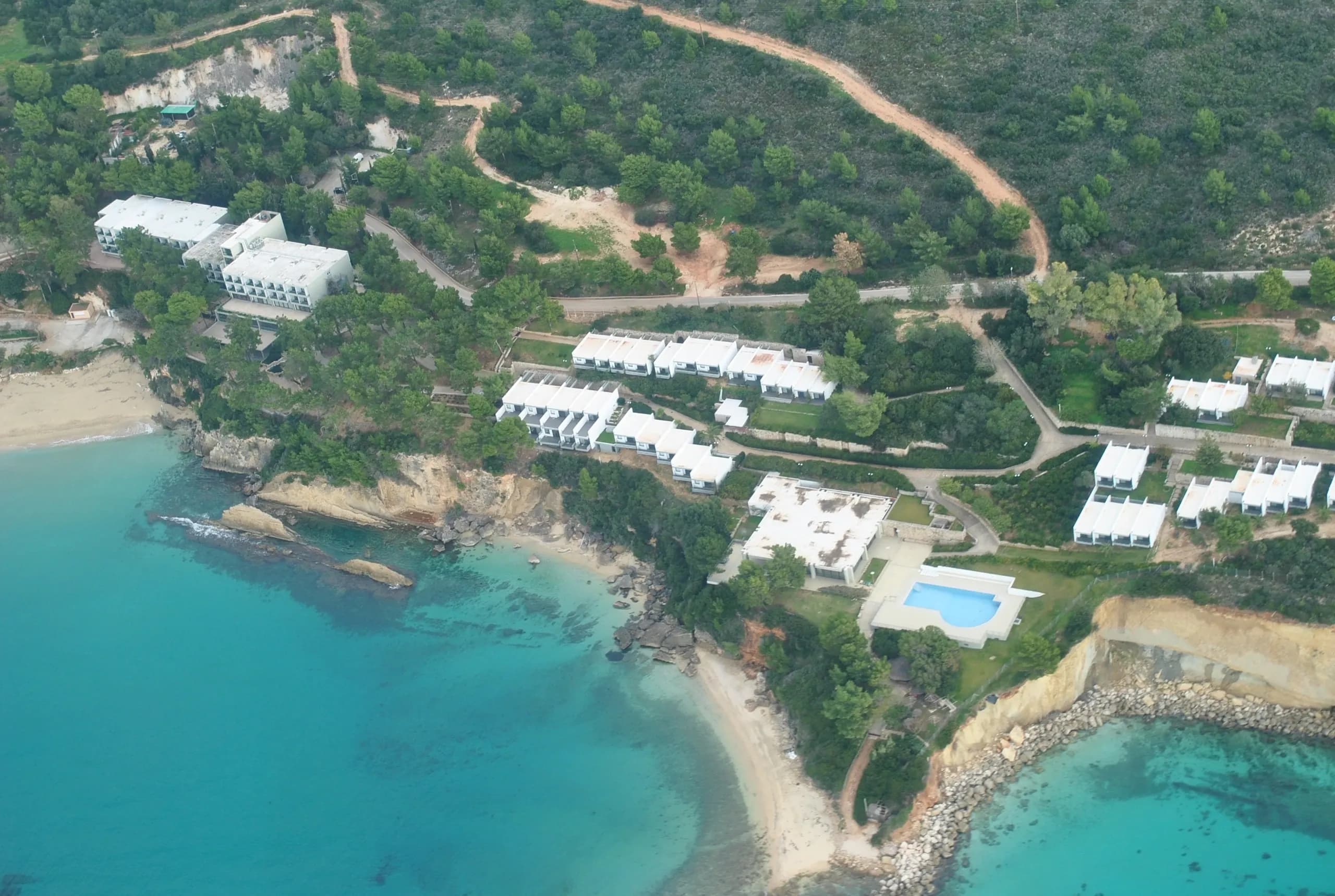
Platis Gialos is the neighbouring sandy beach. Rocks separate the two, so check the entrance and parking for the beach you actually intend to use. If you are staying in Lassi or Argostoli, this area also works for half a day, with less of your time spent getting there.
Platis Gialos on Google Maps (opens in a new tab)
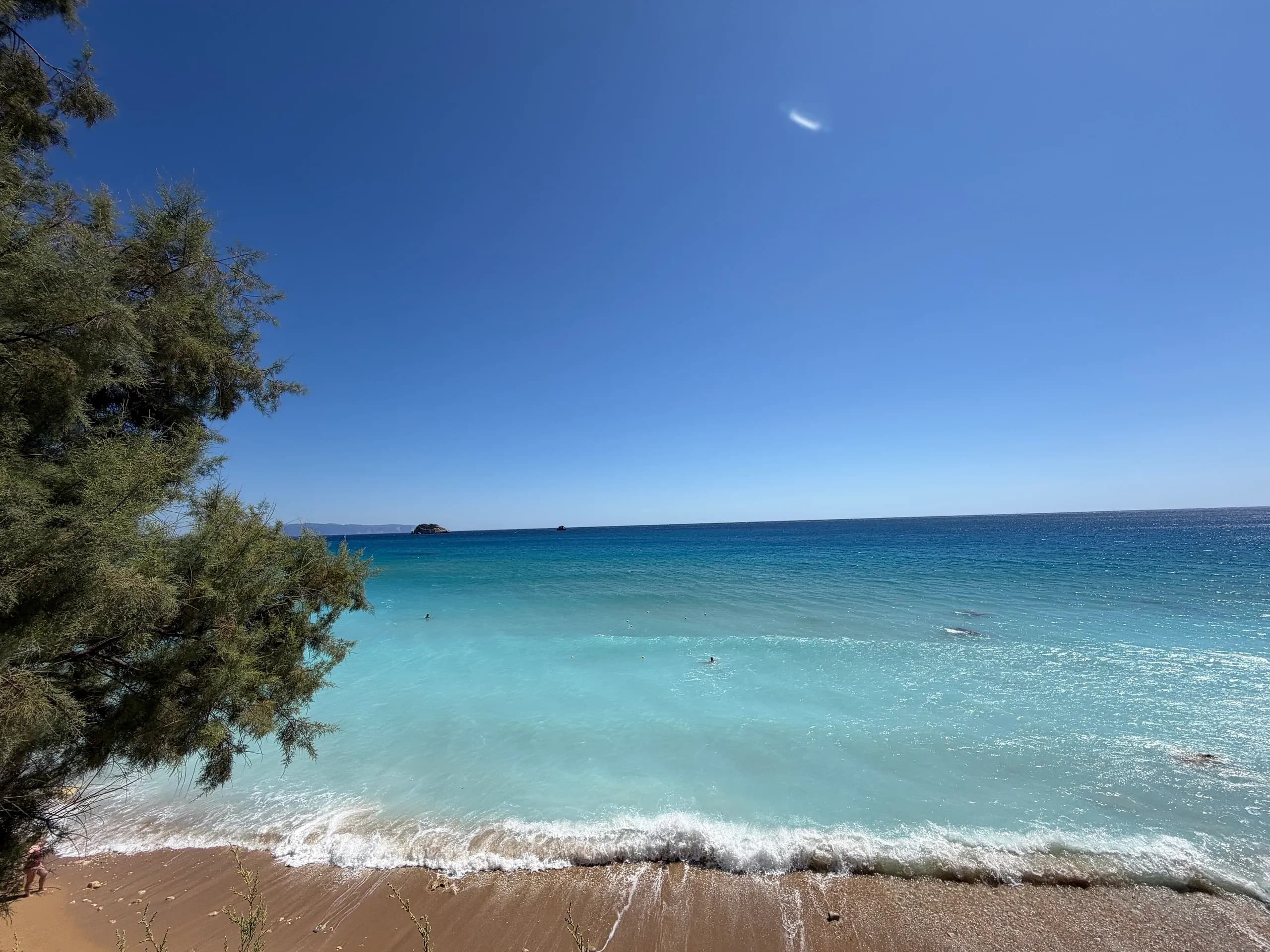
Avithos lies on Kefalonia's southern coast, around Svoronata and Kaligata. Sand, a green backdrop and places to eat nearby make it a good candidate for choosing one beach and staying put. Families who prefer sand may appreciate it, while still checking waves, depth and local instructions before deciding where to swim.
Avithos on Google Maps (opens in a new tab)
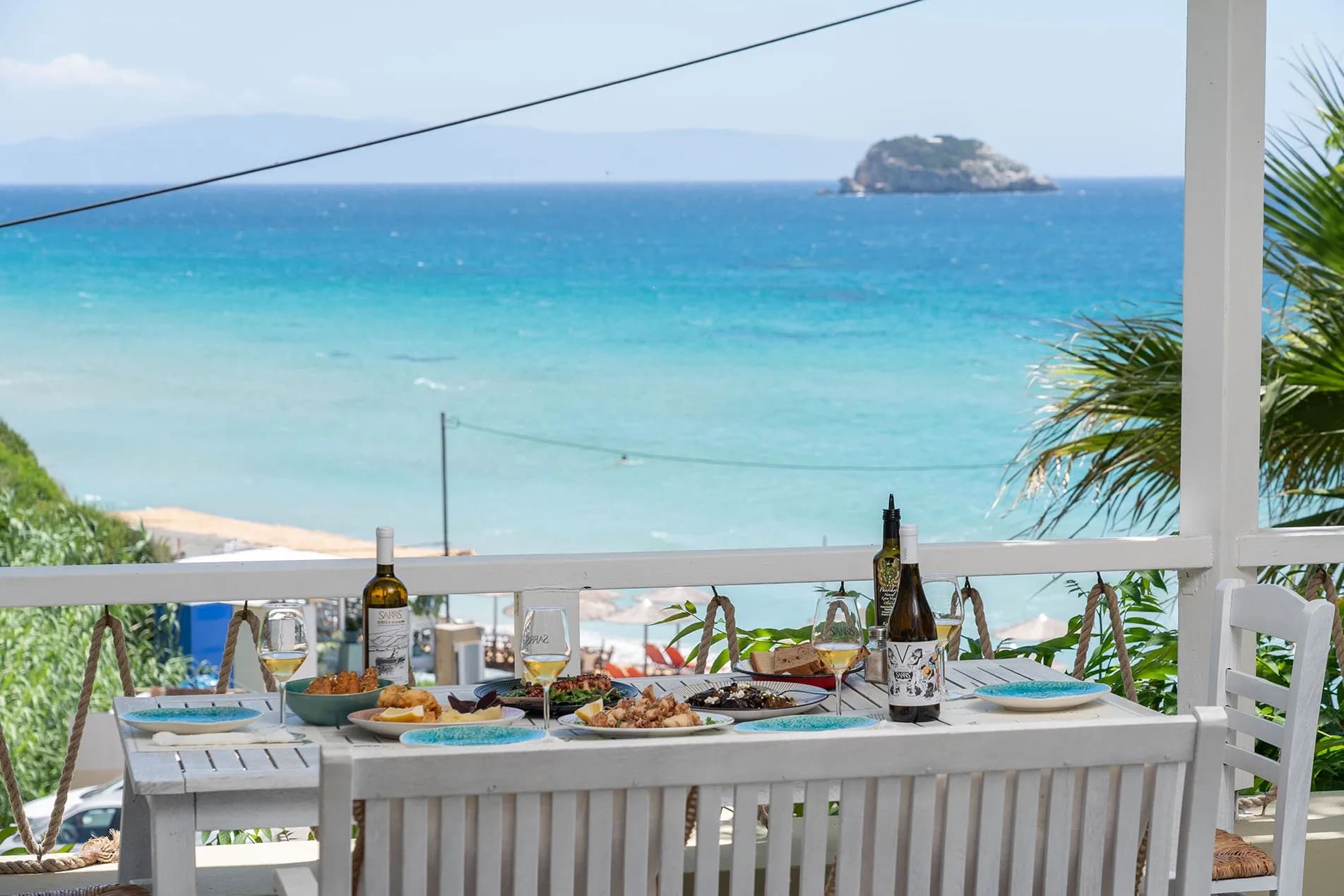
Avithos Preview has a terrace overlooking the sea, but its connection with local cooking is another reason to stop. The restaurant's published menu includes Kefalonian meat pie and Cod Aliada: fried cod with garlic mashed potato and boiled beetroot.
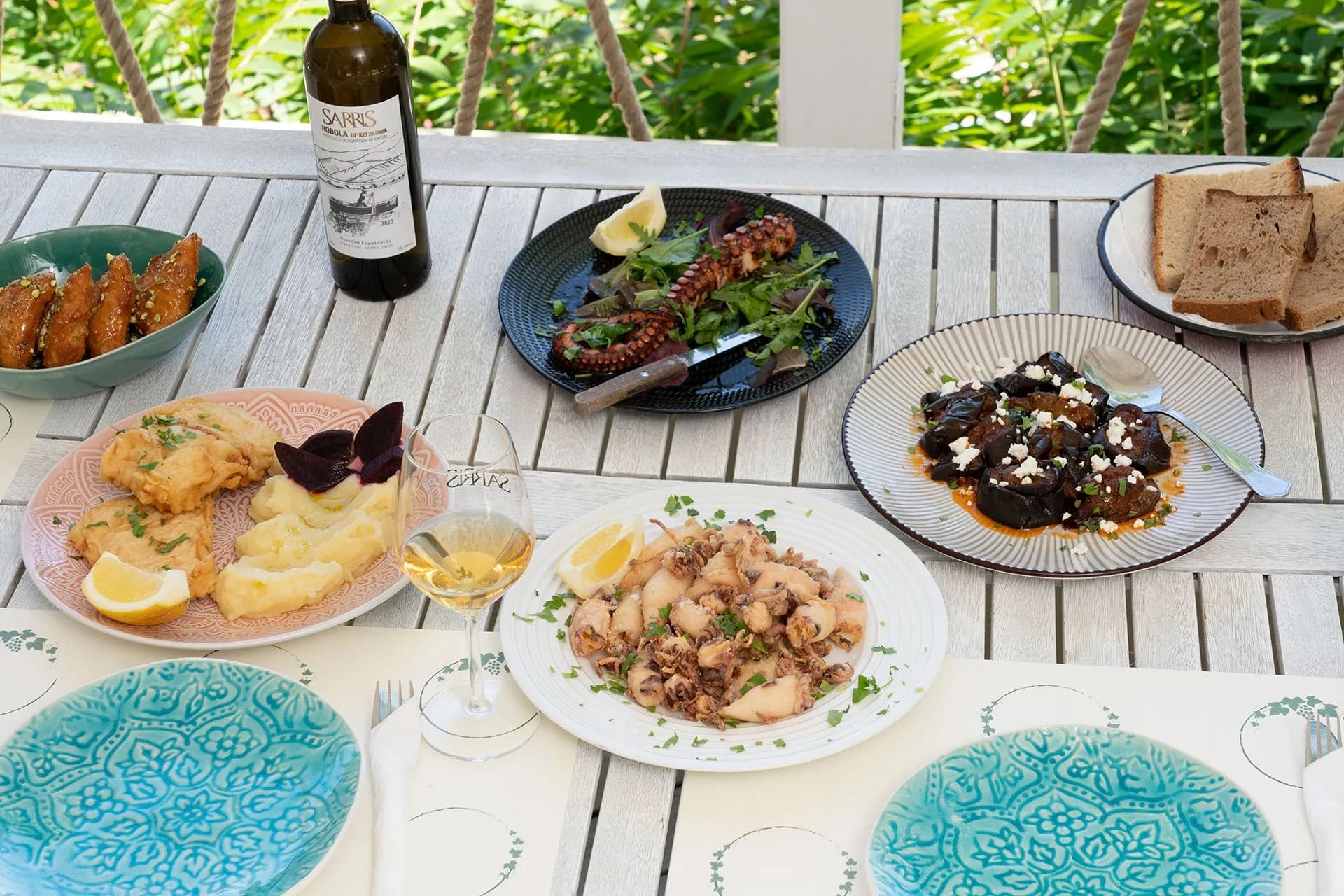
Owner Panos Sarris is also behind Sarris Winery, whose wines feature on the list, including local Robola. If you would like to move beyond your usual Greek salad and tzatziki, ask which Kefalonian dishes are available that day. The restaurant operates seasonally; check opening dates and reserve when needed.
Avithos Preview on Google Maps (opens in a new tab)
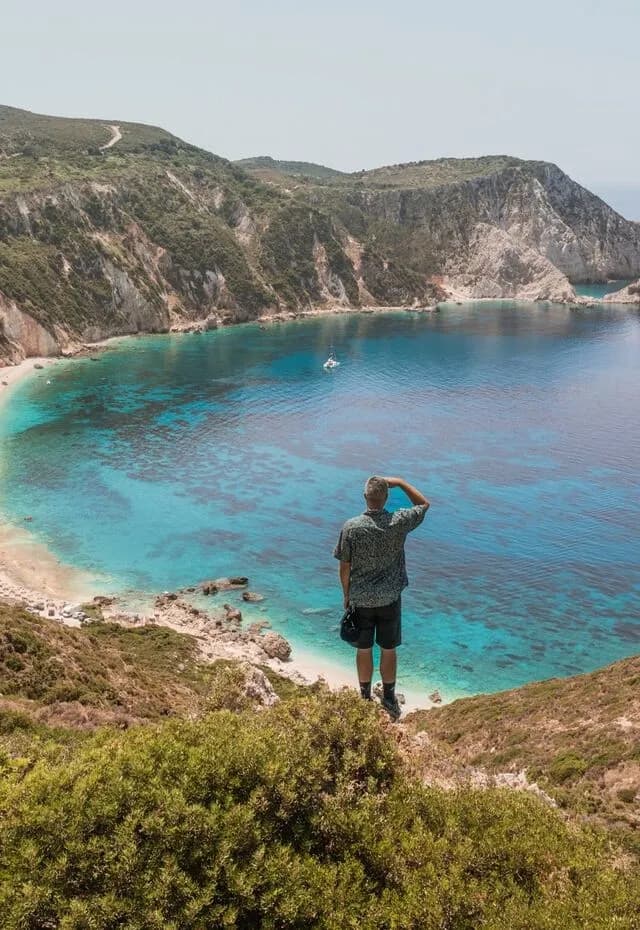
Petani is on the Paliki peninsula, in the Lixouri area. High slopes frame a broad blue bay, and the shore mixes sand and pebbles. The road winds downhill, making this a better fit for a day on this side of the island than a brief detour on the way to Fiskardo.
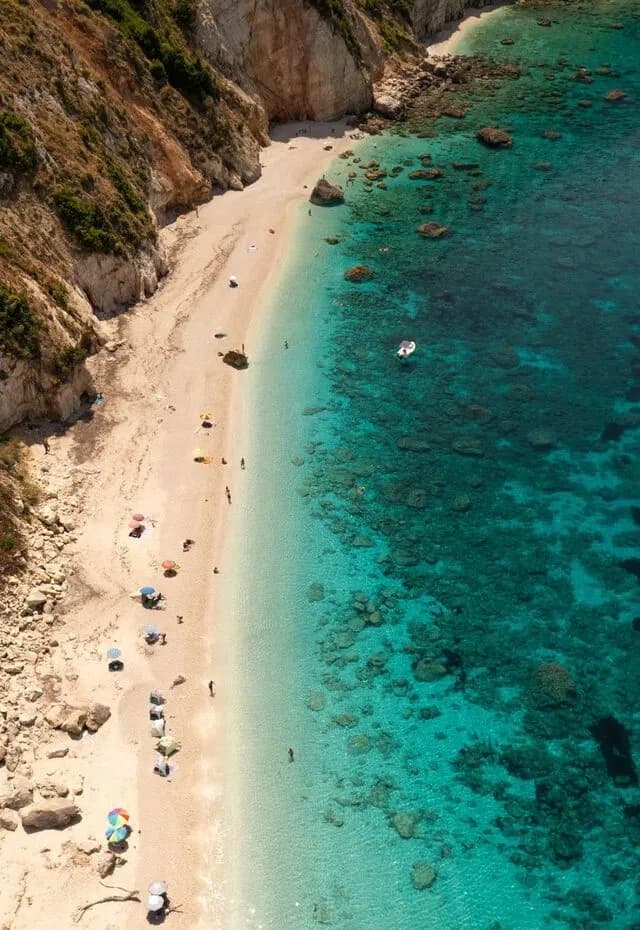
Tavernas and beach facilities operate in season. Its western aspect makes Petani an appealing late-afternoon and sunset choice, but does not guarantee calm water. When wind brings waves, enjoying the view over a meal can be the better plan. Leave time for the return drive uphill, especially if you prefer driving in daylight.
Petani on Google Maps (opens in a new tab)
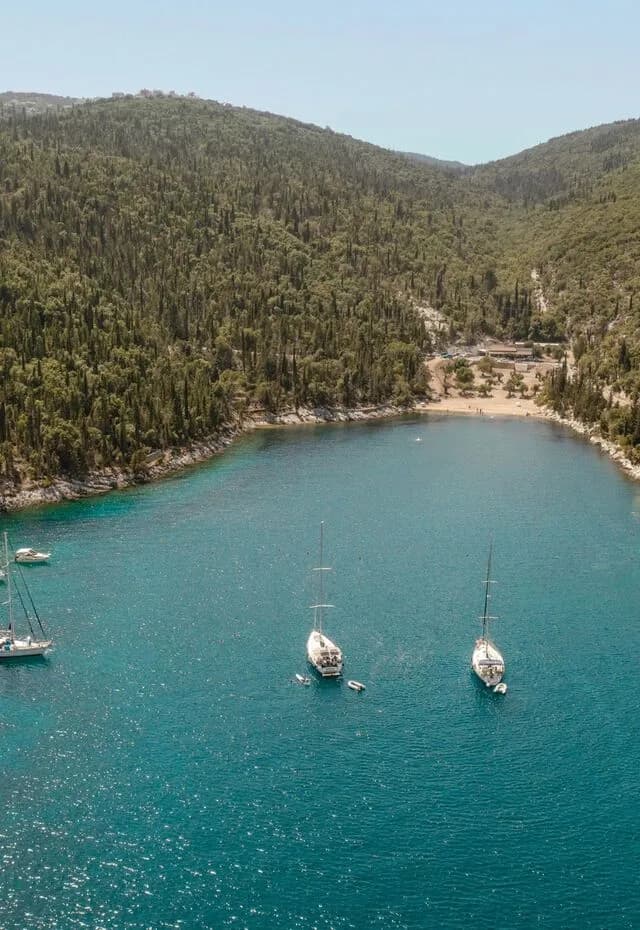
Foki is just south of Fiskardo. Instead of a broad sweep of parasols, you get a small pebbly bay with olive and cypress trees close to the shore. Natural shade is part of its appeal, although space beneath the trees is limited and changes through the day.
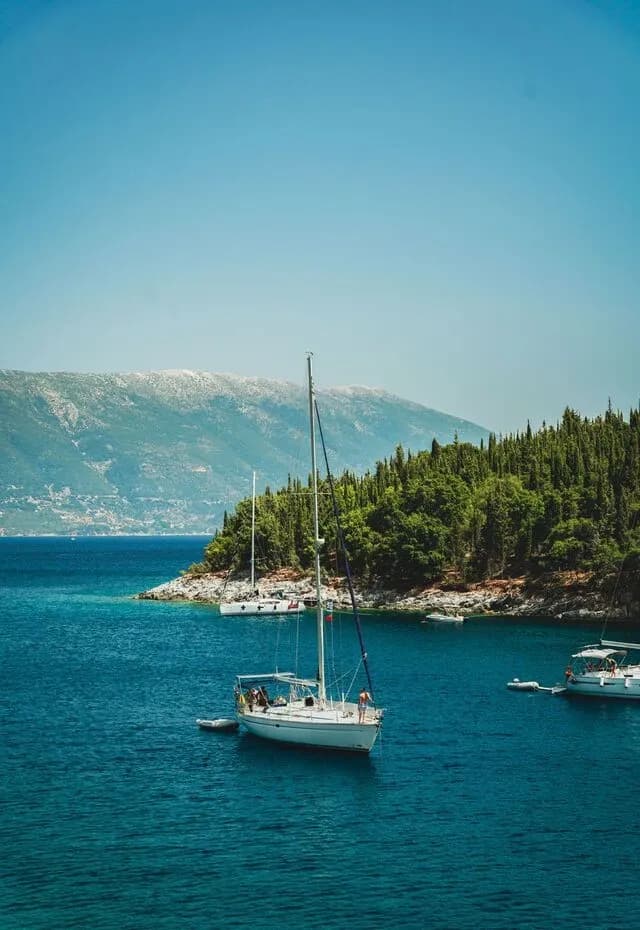
Do not expect a large organised beach. Bring water, a towel and water shoes if needed, and remember that a small, lovely cove can fill up in peak season. There is a taverna above the beach, but the main reason to choose Foki is time by the trees and water as part of a northern island day.
Foki on Google Maps (opens in a new tab)
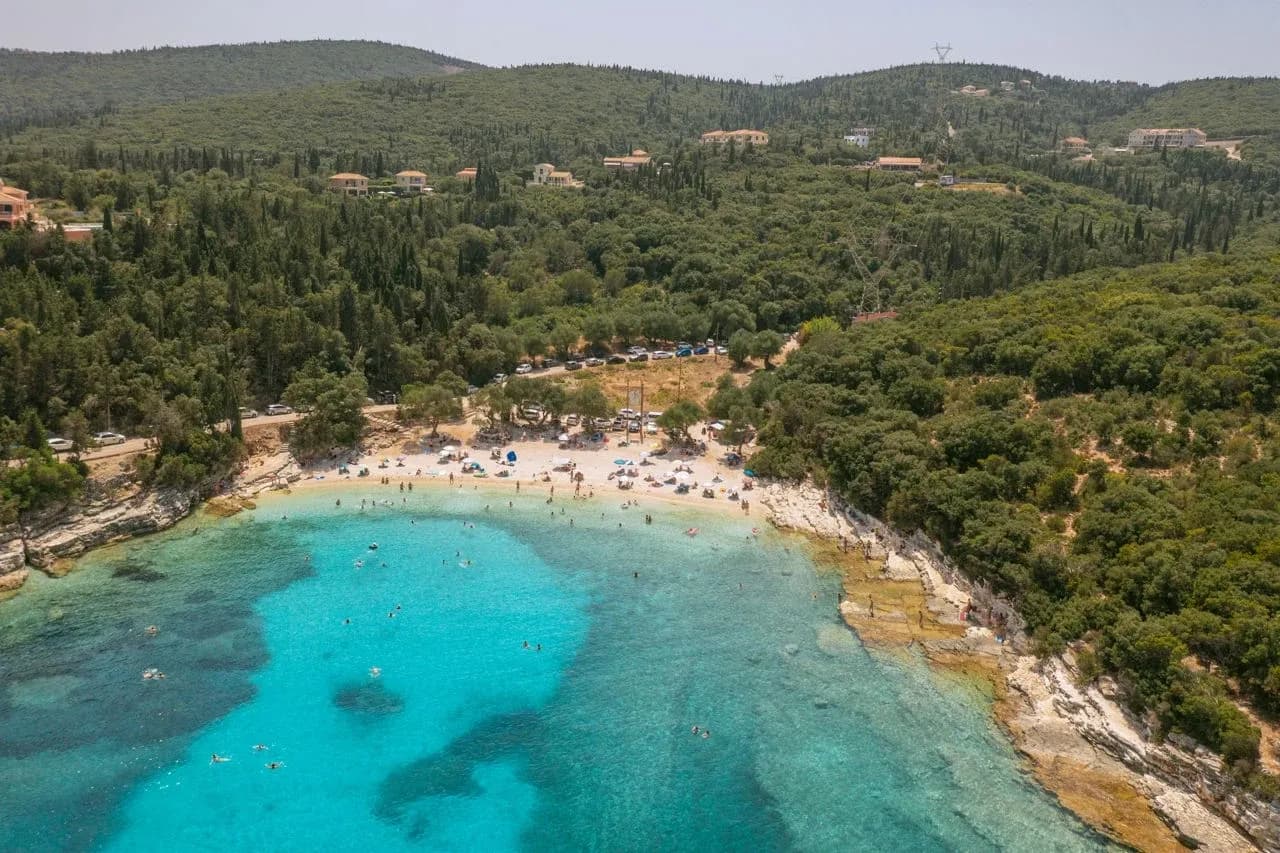
Emplisi, also written Emblisi, lies near Fiskardo. A pale pebbly beach occupies the middle of the bay, with flat rock formations at the sides giving it a different appearance from Foki. Allow time here if your ideal beach stop includes simply sitting and watching the water.
Facilities are limited compared with Lassi's organised beaches, so bring water and sun protection. It is a well-known beach, rather than a local secret guaranteed to be empty in summer. Choose between Foki and Emplisi according to the day, and stay where you are happy instead of feeling obliged to move on.
Emplisi on Google Maps (opens in a new tab)
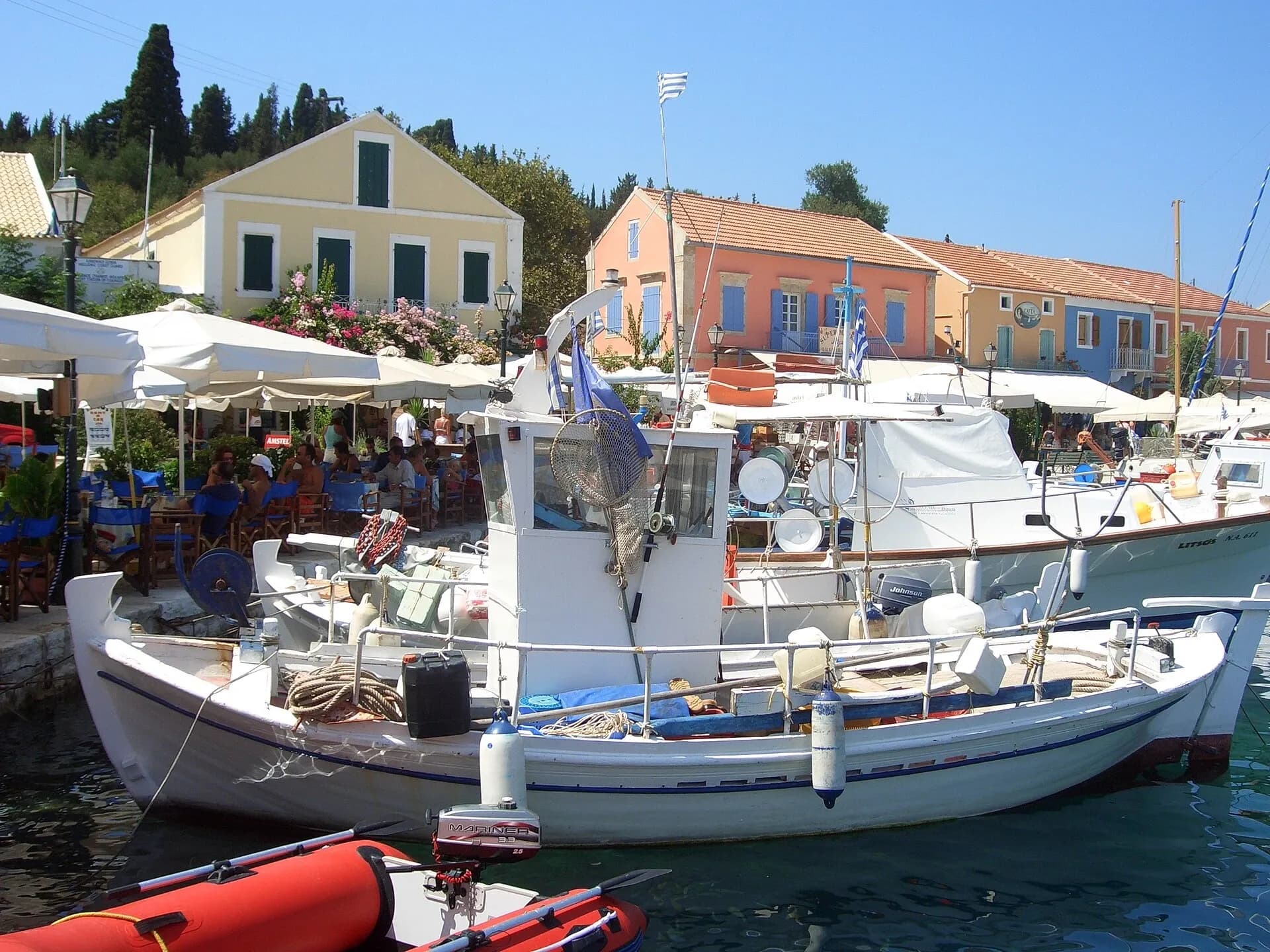
After the beach, continue to Fiskardo's harbour for a walk and a meal overlooking the boats. It is a natural combination: time by the sea followed by a village you can explore on foot. If choosing a restaurant as you go, look at the menu and prices before taking a waterfront table.
Fiskardo on Google Maps (opens in a new tab)
Think in separate area days: Lassi and Avithos in the south; Antisamos and Sami in the east; Myrtos and its surroundings on another day; and Foki or Emplisi with Fiskardo in the north. Save Petani for Paliki. These are suggested combinations, rather than an itinerary you need to complete in sequence.
Check wind forecasts, sea conditions and seasonal business openings before setting off. Services may close towards the end of the season even when the beach remains accessible. To connect your chosen areas with accommodation, explore our places to stay in Kefalonia.
Choose Myrtos for dramatic cliffs, Makris Gialos or Avithos for sand and nearby services, Antisamos for a beach day near Sami, Foki or Emplisi for the north, and Petani for Paliki. The best fit depends on your base, preferred beach surface and sea conditions.
Makris Gialos and Platis Gialos in Lassi, and Avithos on the southern coast, are sandy options. Myrtos and Petani mix sand and pebbles. Antisamos, Foki and Emplisi are primarily pebbly beaches.
Makris Gialos and Avithos are candidates for families who prefer sand and food nearby. Suitability depends on children’s ages, access and conditions that day. Myrtos and Petani can deepen quickly, so attractive scenery should not be taken as evidence of suitable swimming conditions.
Myrtos has a mixture of sand and white pebbles. From a high viewpoint it may appear sandier than it feels underfoot. Water shoes can help visitors who find stones uncomfortable.
Myrtos sits below high cliffs in the northwest, reached by a steep road, with relatively limited seasonal facilities. Antisamos is near Sami in the east, surrounded by green slopes, with several seasonal beach businesses and food options. Both have pebbles, and swimming conditions vary.
Makris Gialos and Platis Gialos in Lassi are sandy beaches close to Argostoli. Avithos is farther south, around Svoronata and Kaligata, and works for a beach day combined with lunch nearby.
Foki offers a small bay with trees close to the shore. Emplisi has a pale pebbly beach with rock formations at the sides. Both have more limited facilities than Lassi’s organised beaches, and both can be busy in summer.
At Avithos, Avithos Preview lists local dishes such as Kefalonian meat pie and Sarris wines. Acron operates a beach bar and restaurant at Antisamos. After Foki or Emplisi, you can continue to Fiskardo’s harbour restaurants. Check seasonal opening dates and current menus.
Cave visits, an Argostoli morning, Assos, wine tasting and a farm meal: plan separate Kefalonia outings with maps and practical tips.
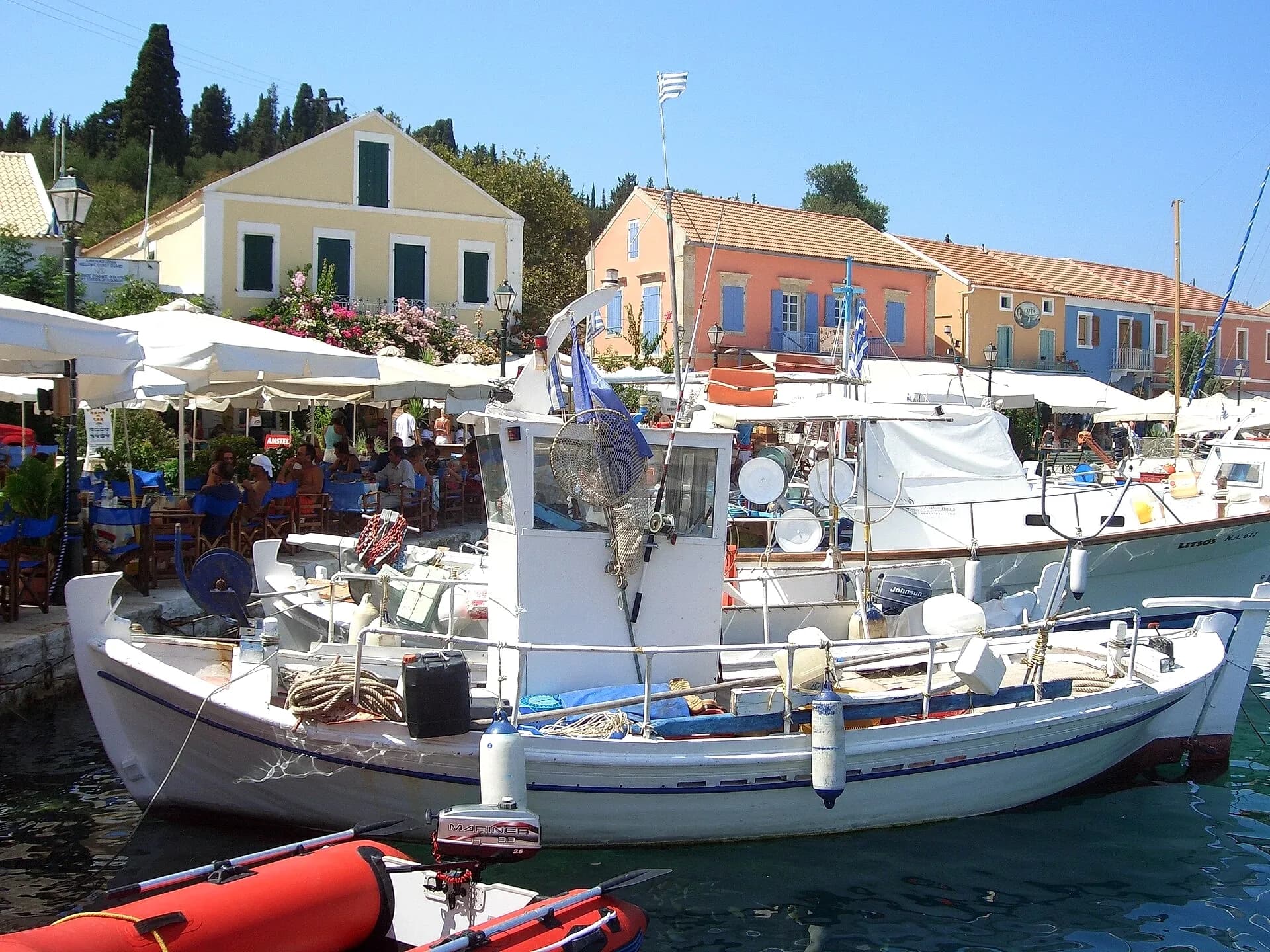
Explore the harbour lanes, walk the short Faros trail and choose a seafront meal, with maps, seasonal restaurant details and one nearby beach.
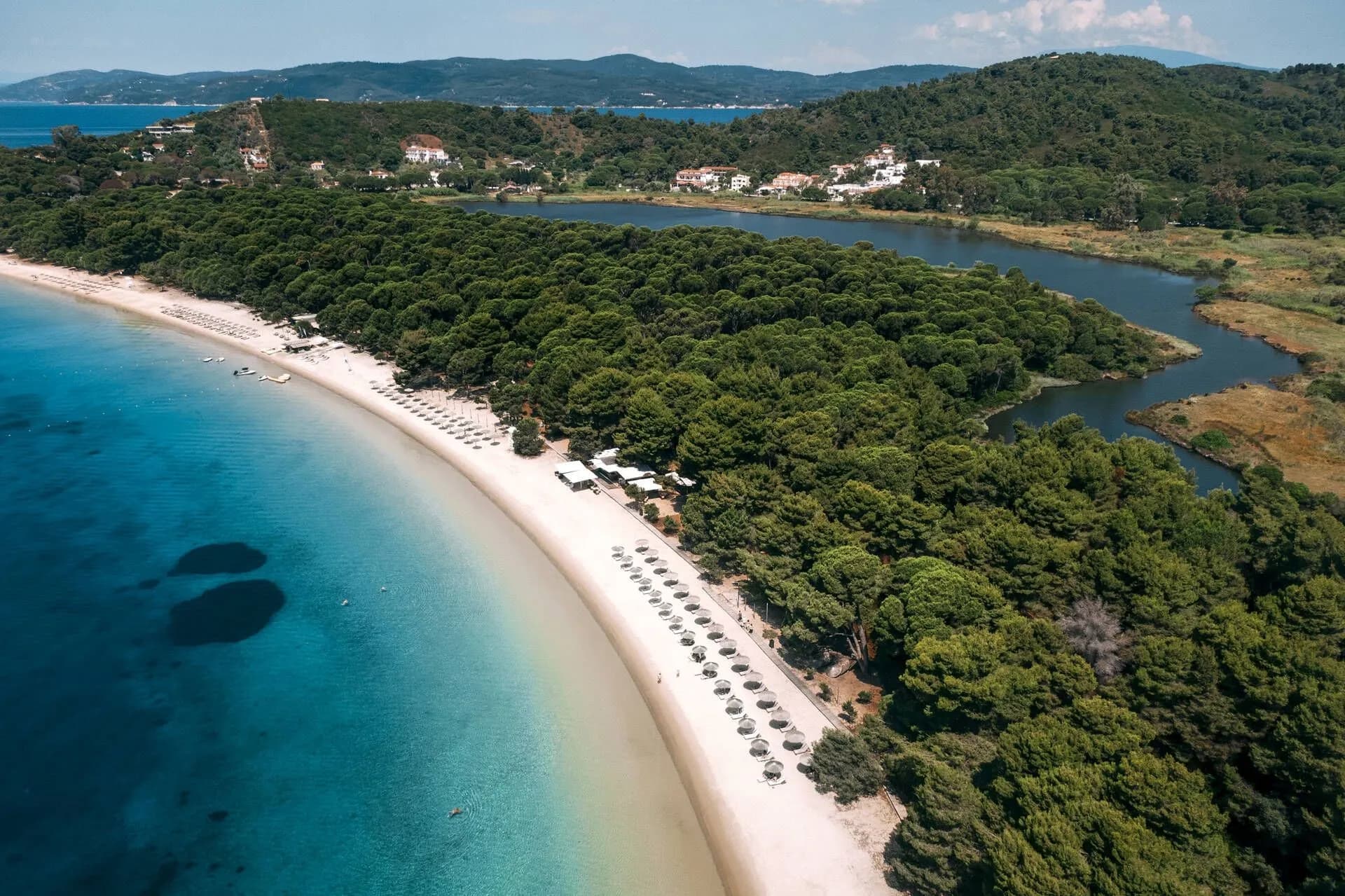
From Koukounaries and Troulos to Lalaria: choose a Skiathos beach by access, wind and atmosphere, with maps and car-free travel tips.