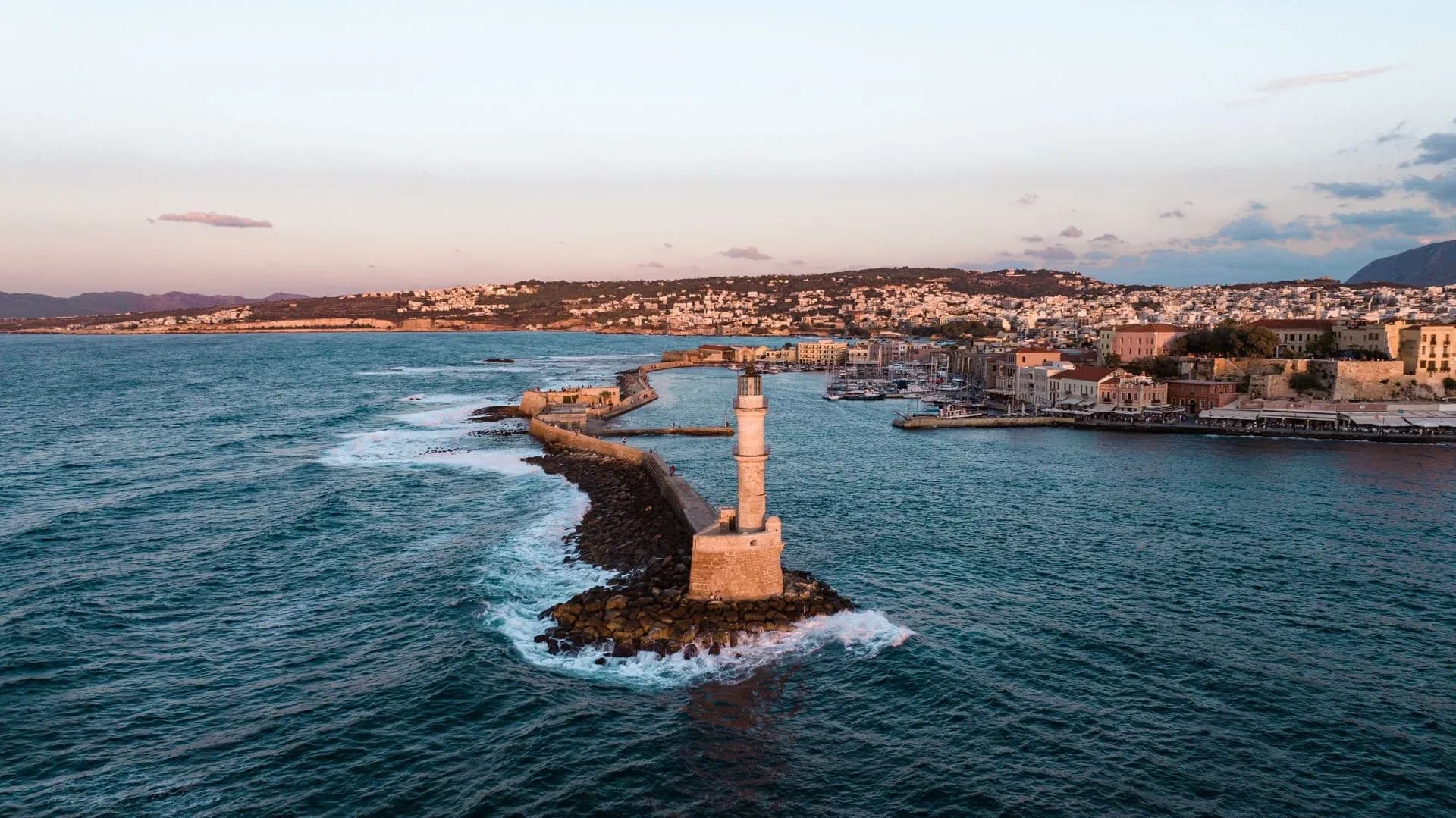
One week in Crete: Chania to Heraklion
Seven days with two bases: Chania, a beach day, villages, Rethymno and Knossos, with options for families and travel without a car.
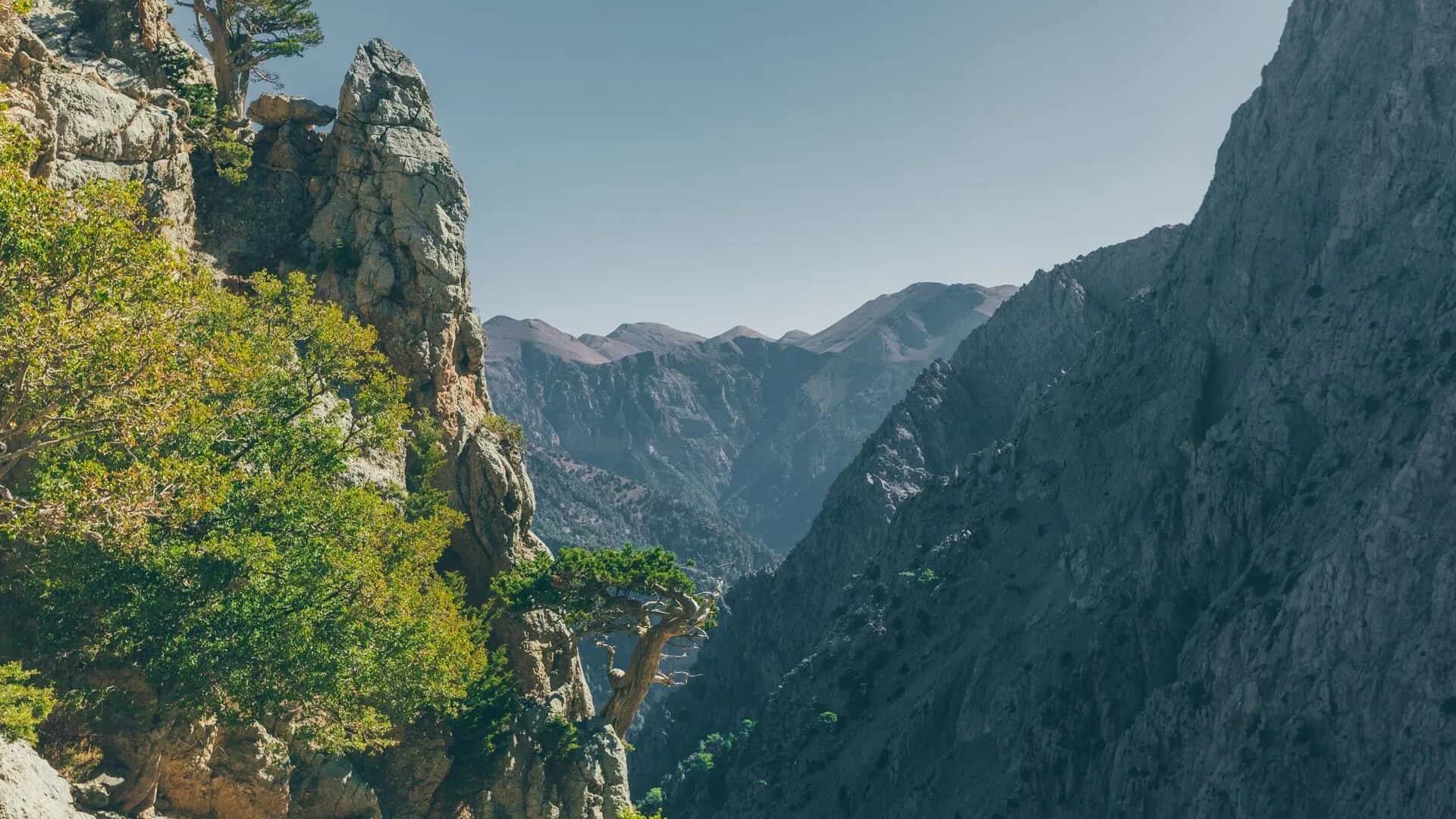
From Xyloskalo to the Iron Gates and Agia Roumeli: plan the Samaria hike, assess the terrain and arrange the ferry and bus back.
Samaria begins high in the mountains and ends beside the sea. Between the two, the landscape changes from pine and cypress forest to the old village's stone houses and, finally, cliffs closing around a narrow passage. It is a remarkable day in western Crete, best chosen because you want several hours of walking on rough ground, rather than simply a photograph of the Iron Gates.
The gorge closes for winter, and spring opening depends on maintenance, weather and approval from the park. Before booking transport, check the official website for access on your travel date. Check again the evening before and on the morning of your hike.
The usual route starts at Xyloskalo, beside the Omalos plateau at about 1,230 metres, and descends south to Agia Roumeli. The park describes approximately 13 kilometres on the main path, followed by another two kilometres to the coastal village. Many guides use 16 kilometres. For planning, think roughly 15-16 kilometres overall, rather than 13 kilometres ending on the beach.
Allow around six to seven hours for walking and rests. The whole outing is longer: the morning mountain journey, hike, wait for the ferry and return bus can occupy the day into the evening. From Chania, avoid an early dinner reservation that depends on a precise return time, and leave room for a quieter following day.
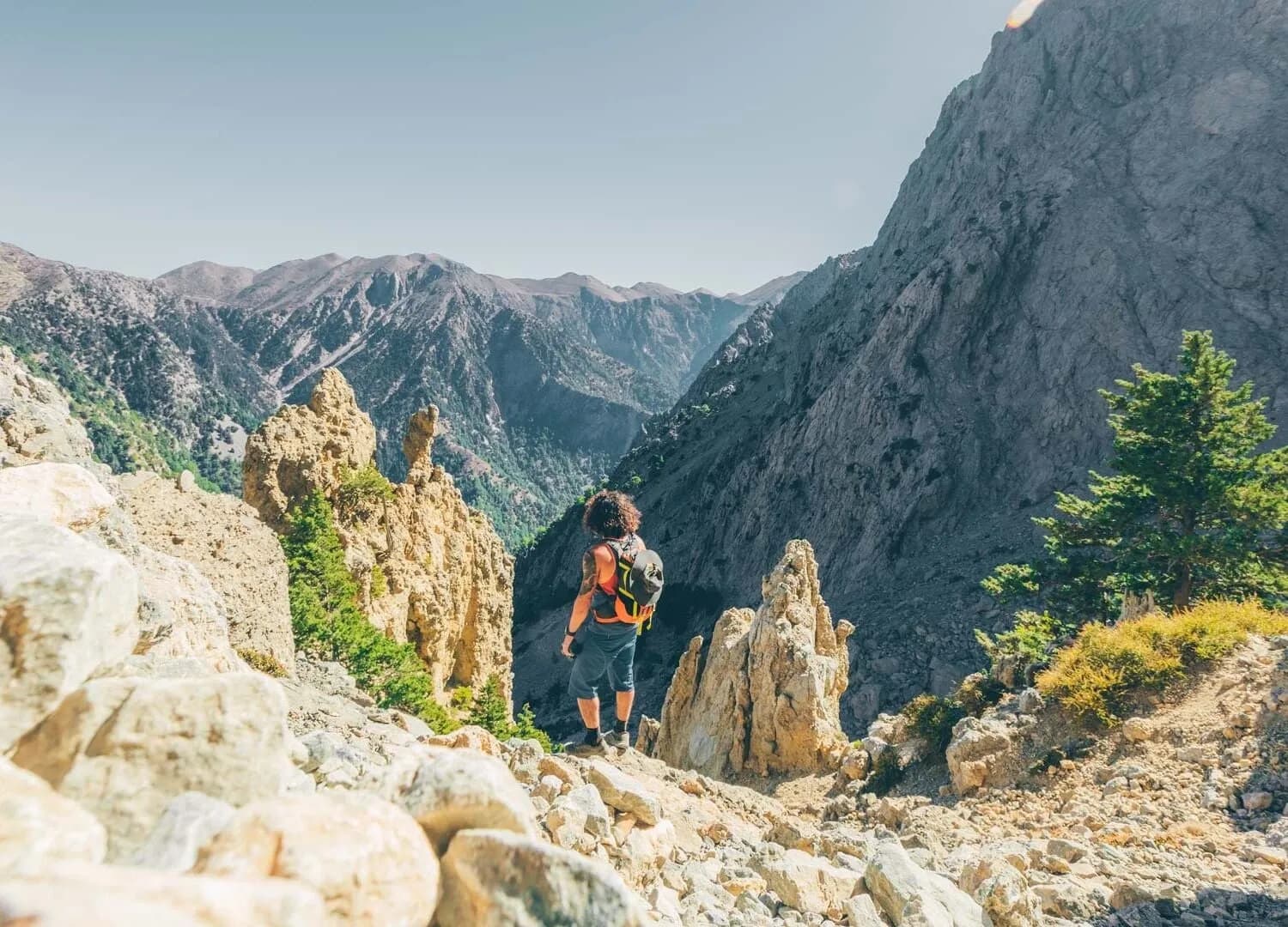
The northern entrance leads into a relatively steep descent, with stone steps, bends and uneven ground. Downhill does not mean easy on your knees. Wear walking shoes you have already used and keep a pace that lets you watch your footing. Poles can help if you are accustomed to using them.
Xyloskalo entrance on Maps (opens in a new tab)
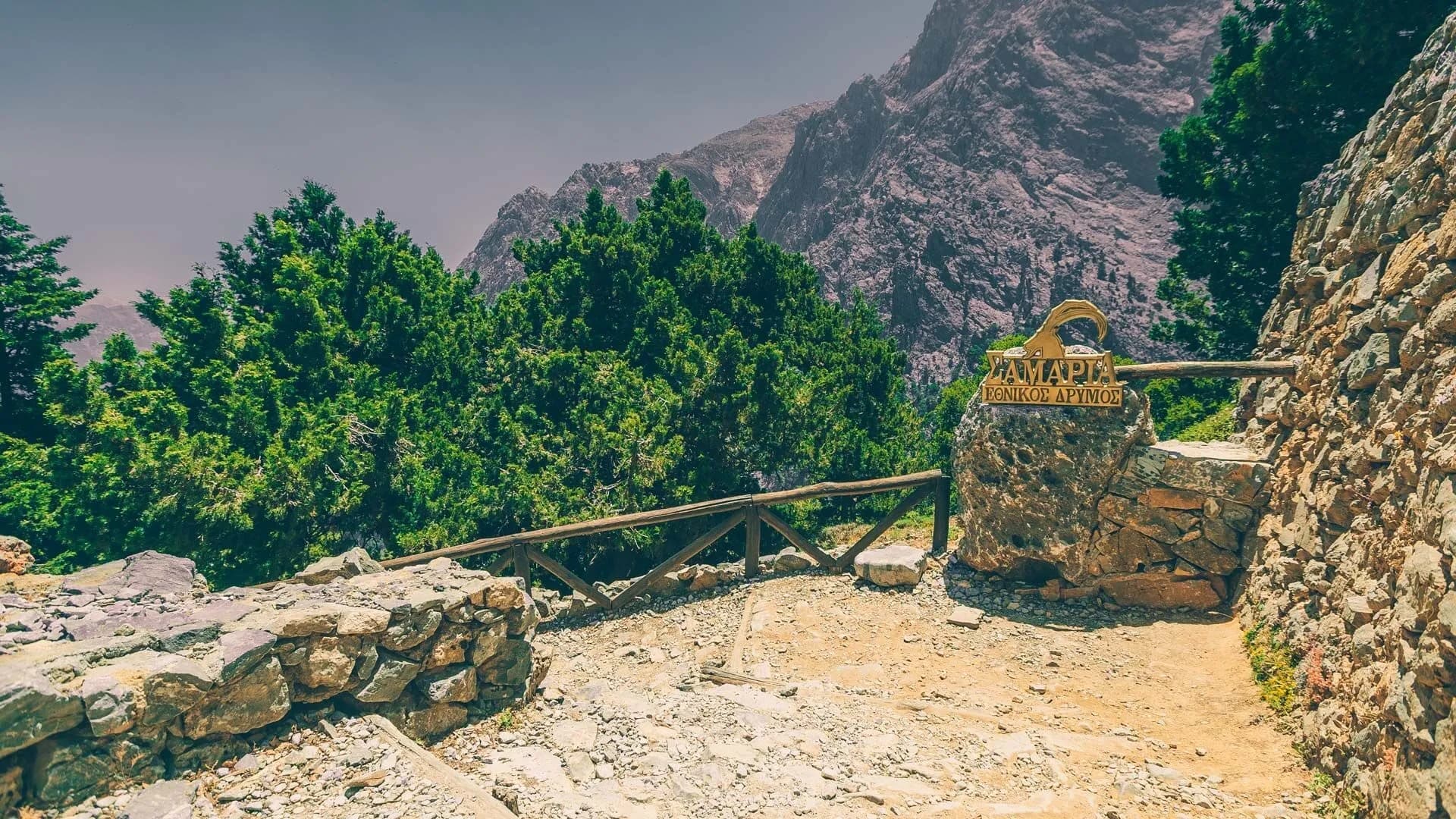
The path continues through forest towards Agios Nikolaos. This is a different setting from the famous narrow canyon photographs, and the journey through it is part of the attraction. Stop at designated rest places, rather than beneath signs warning of falling rocks.
After the forest walk, you reach the remains of Samaria village in the middle part of the route. Its stone houses recall the people who lived here before the national park. Use the rest stations for food and water, but do not count on buying lunch: there are no food shops inside the park.
Old Samaria village on Maps (opens in a new tab)
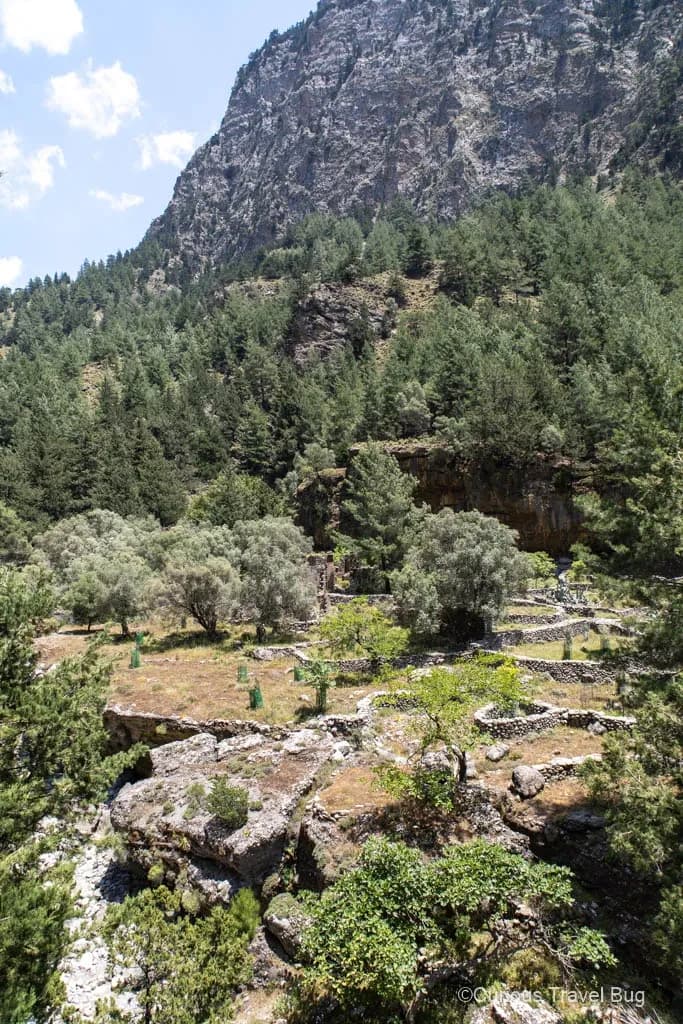
You may see kri-kri goats along the way. Keep your distance and do not feed them, even if they approach walkers. Familiarity with visitors does not make them pets, and the feeding ban applies to every kind of food.
In the lower gorge, Portes, often called the Iron Gates, narrows to a few metres between high rock walls. It is a highlight of the walk, but do not stop for a photograph in a signed danger area or block the passage.
Iron Gates on Maps (opens in a new tab)
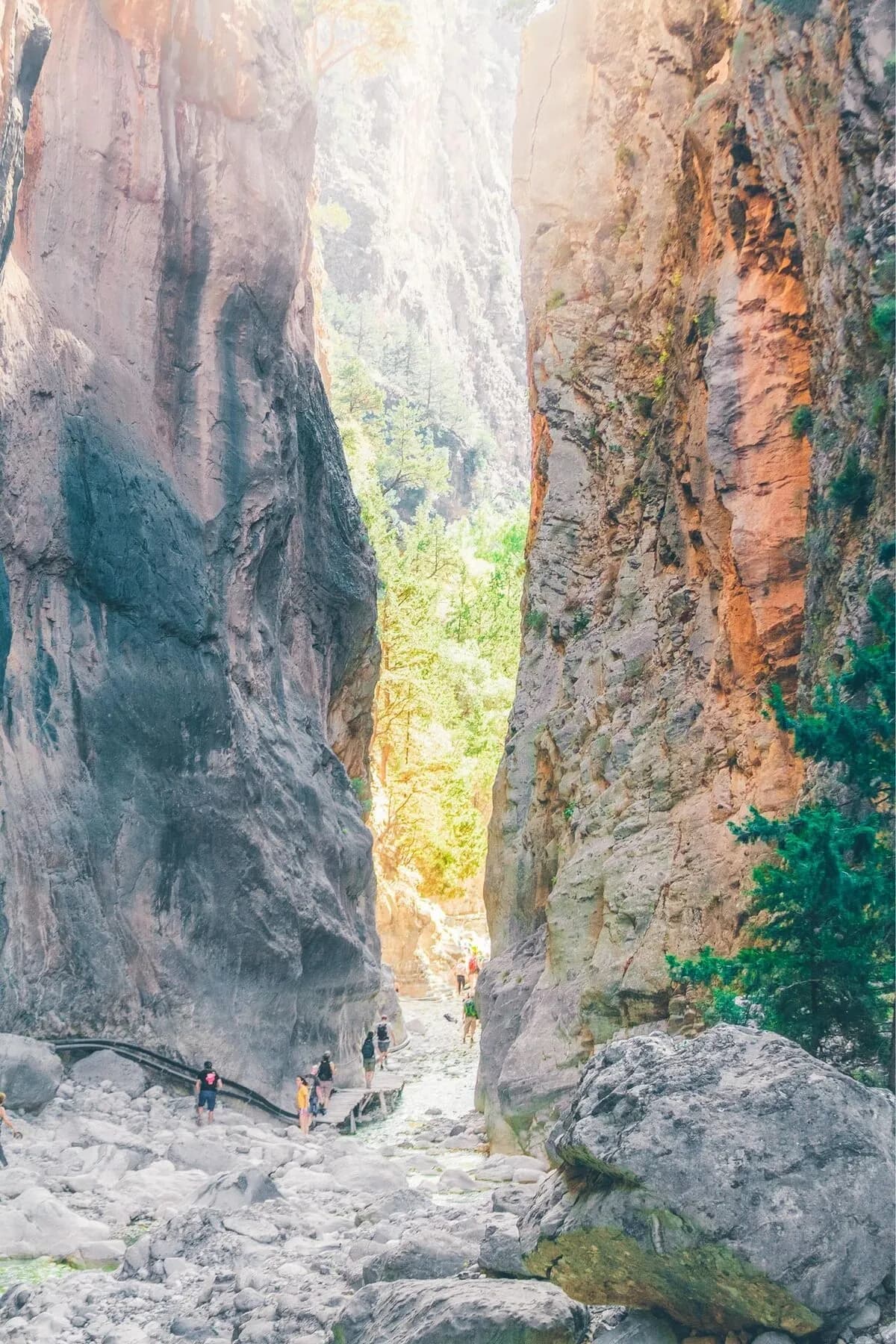
After the official park exit, you still need to reach Agia Roumeli. This final stretch is more exposed, and you arrive at it after hours on your feet. Save water, sun protection and time for it. Keep your entrance ticket until after the exit check.
The walk does not return to its starting point. Agia Roumeli has no road connection, so a typical Chania day has four parts:
Chania bus station on Maps (opens in a new tab)
Bus and ferry schedules change through the season. Before booking, make sure your boat arrives at the port where your return bus leaves. Do not rely on the 17:30 departure repeated in older guides, or assume daily service in every month. A ferry serving the village does not establish that the gorge is open.
Sougia port on Maps (opens in a new tab)
Chora Sfakion on Maps (opens in a new tab)
If you leave a car at Xyloskalo, arrange its retrieval. The park describes taking a ferry to Sougia and a bus from there to Omalos. Confirm that the connection operates on your date and drops you where you need to be. Sailing to Chora Sfakion without a car-retrieval plan adds a complicated journey to the end of a long day.
In the village, you can finally put down your bag, sit at a taverna and order a cold drink. There is also a beach, but swimming time depends on your walking pace, sea conditions and booked departure. Reach the village, check where your boat leaves, then decide whether you have time for both food and the sea.
Agia Roumeli on Maps (opens in a new tab)
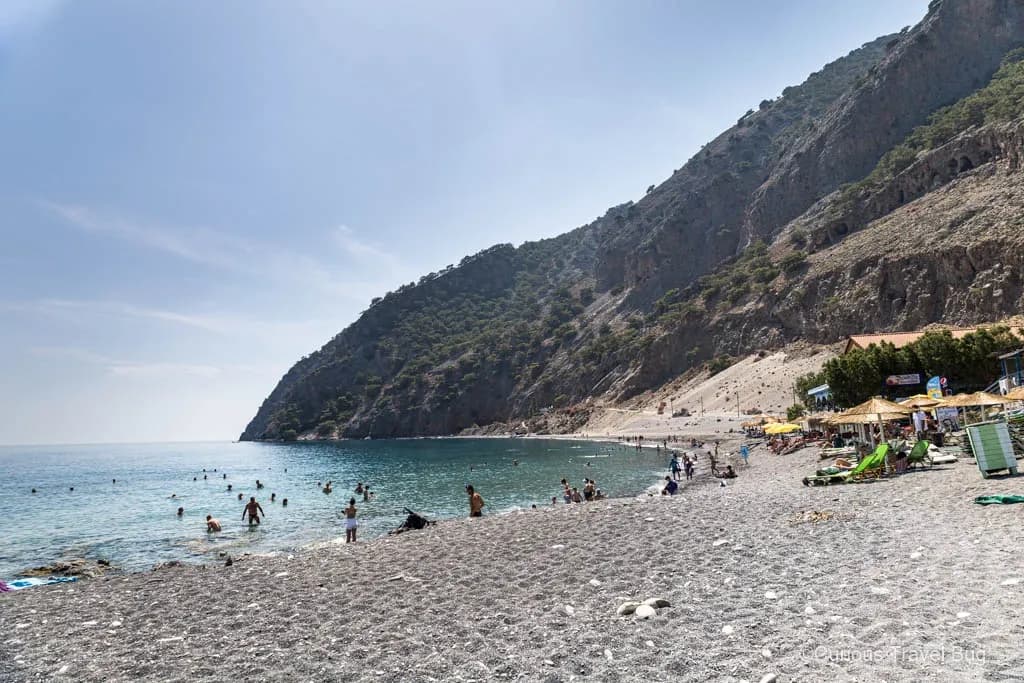
An overnight stay is another option, arranged in advance with accommodation and onward sailings. That means staying outside the park; camping and overnight stays inside it are prohibited. Rough seas can cancel boats, so ask about sailing conditions before starting the hike, rather than waiting until the end.
Independent planning is possible for experienced walkers who arrange every transport leg. An organised trip can simplify accommodation pickup and transfers, but read the inclusions: some prices exclude both the ferry and park admission. Also ask whether a guide walks with you or an escort coordinates the group and transport.
Standard individual admission is €10; check the current price on the park website before booking. Add the outbound bus, ferry, return bus and food to your budget. Check concessions, special categories and transport fares when booking. Compare complete costs, rather than an organised trip's headline price against an independent total that includes every ticket.
Choose the full route if you can walk for hours on rocky ground and manage a sustained descent. It is a poor choice for a first long hike with small children. The park has no single age threshold that proves suitability: previous experience on comparable walks matters, and minors require an adult companion. The gorge has no accessible infrastructure for completing the route with a wheelchair or pushchair.
Bring grippy walking shoes, a hat, sun protection, a light layer for the mountain morning, food for the walk and full water bottles. There are refill points, but ask which are available that day and do not start with an almost empty bottle. Add tissues, basic personal supplies, regular medication, payment options, identification and an accessible entrance ticket.
Stay on the main path, follow signs and staff instructions, and carry your rubbish out. Swimming in the stream is prohibited; save your swimwear for the coast if conditions allow. Drones require special permission too. If someone cannot continue, contact staff; the park's working animals should not be treated as an optional transport service for tired visitors.
During the operating season, when access is permitted, you can enter from Agia Roumeli and walk towards the Iron Gates before returning the same way. It is an out-and-back walk, not a circular route. The park places the Gates about 1.5 kilometres from the southern outpost, but you must also include the walk between the village and park entrance in both directions. Do not mistake the outpost-to-Gates distance for the entire outing.
This version still needs walking shoes, water and ferry planning. After 13:00, additional distance restrictions apply from the entrances; check what is permitted at your arrival time instead of assuming you can reach the Gates at any hour. Winter and safety closures apply to short visits too.
For a quieter day before or after the hike, use our Chania guide. Families with younger children can find other outings in Crete with kids. Our things to do in Crete guide helps you choose the next area to explore.
Allow around six to seven hours for walking and rests. The park path is about 13 kilometres, followed by roughly two kilometres to Agia Roumeli. Transport from Chania and back makes it a full day into the evening.
No. The gorge closes for winter, and spring reopening depends on weather, maintenance and park approval. Check the official website for opening dates and access notices before booking transport.
It is a long walk on rocky ground, with a steep initial descent and exposed sections later. Suitable fitness and grippy walking shoes are important. Descending towards the sea does not make it an easy stroll or a pushchair-accessible route.
Take a ferry from Agia Roumeli to Sougia or Chora Sfakion, then a bus to Chania. Match both tickets to your date. Retrieving a car at Xyloskalo requires a suitable Sougia-to-Omalos connection.
Independent hiking can be planned during the operating season, subject to park rules. An organised trip can simplify transport, but check the inclusions and whether the guide walks with the group or coordinates the day as an escort.
Standard individual admission is €10; check the current price on the park website before booking. Buses and the ferry cost extra. Check ticket categories, concessions and current transport fares when booking.
There are water refill points and toilets, but arrive with water and ask what is available that day. No food shops operate inside the park, so carry food for the walk. Meals are available after exiting, in Agia Roumeli.
In season, check the permitted hours and restrictions for an out-and-back walk from the southern entrance. Include the distance between Agia Roumeli and the entrance in both directions. It is still a rough-ground walk, with suitability depending on the children’s experience and ability.
Seven days with two bases: Chania, a beach day, villages, Rethymno and Knossos, with options for families and travel without a car.
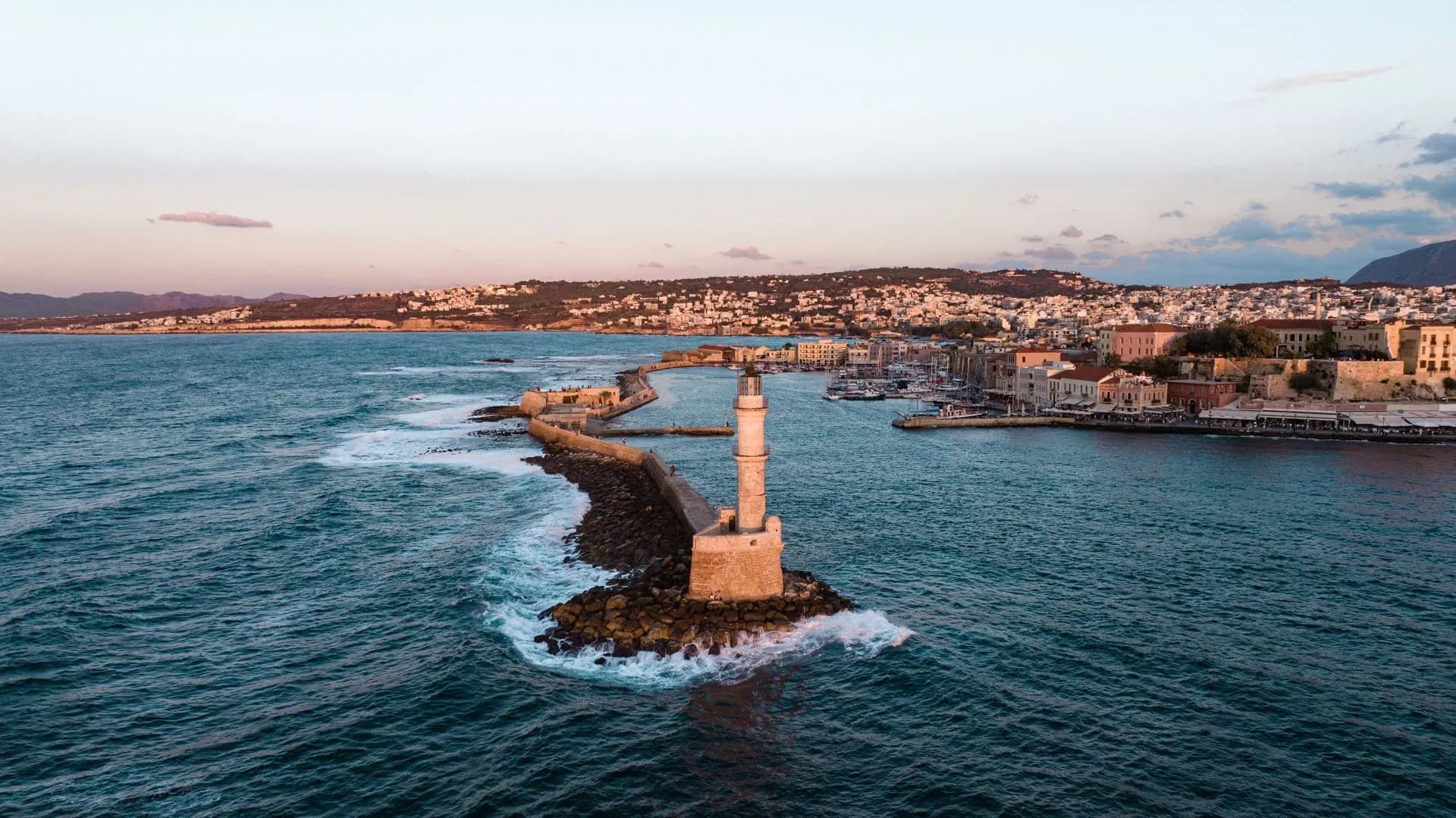
Harbour walks, neighbourhood lanes, a street market and local food: explore Chania with maps, practical tips and current museum and market details.

Beaches, an aquarium, water parks and seaside towns: how to explore Crete with children, region by region.